The Braver journal
Should we take inspiration from geeks?
When I met Mathieu, one of the things that impressed me was the world he worked in: technology. He told me about his work, the "open source" projects he contributed to, the conversations he had with strangers and his desire to help advance the knowledge of this community of practice.
 Marie-Lou Gagnon
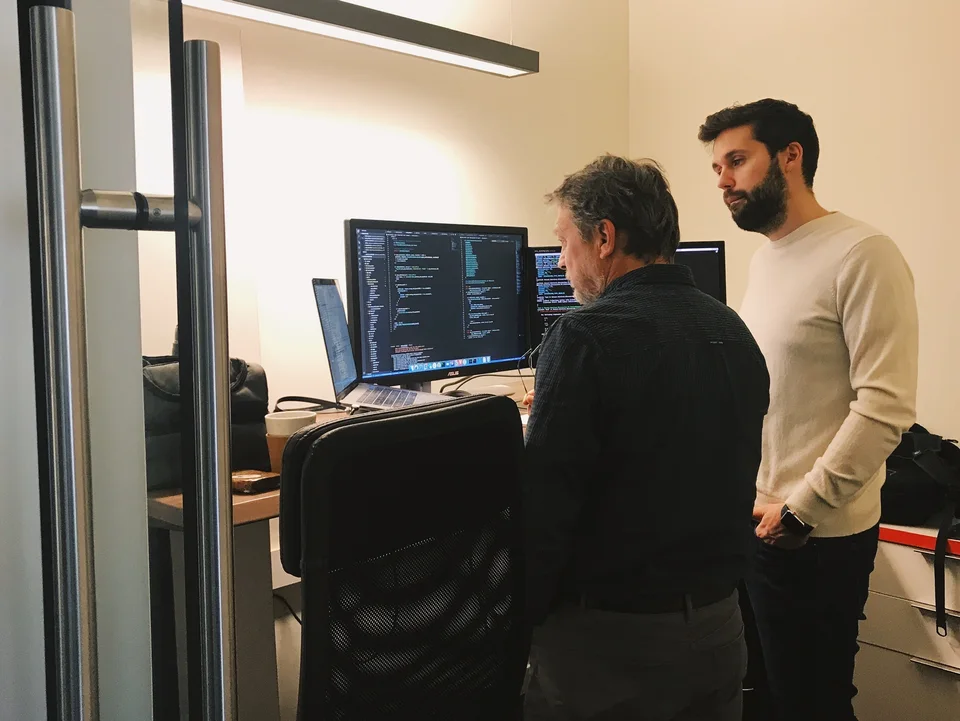
At that moment, I realized, with a hint of envy, just how collaborative and open the software development community was. I was fascinated to see these developers freely sharing their work as often as possible, with continuous improvement in mind. I was captivated by their desire to share knowledge and help one another tackle complex problems. And naturally, I drew a parallel with my own experience in healthcare and the way we interacted with one another.
My appreciation for collaboration in the technology world led me to question how we collaborate in healthcare. I wondered whether we could truly say that a culture of collaboration was alive in our network. Of course, it is in part; that is undeniable. But this collaboration is fragmented, limited to very specific circles and often only to the most urgent cases.
Let's return to the technology world. What is distinctive about this world is that its members are often at the forefront of adopting innovations. This characteristic has meant that the developer community integrates new communication tools, sharing platforms and social networks into its way of working very quickly. And this has very likely contributed to the culture we see today. In other words, communication channels have probably catalyzed the development of a culture of collaboration (source).
But is a communication channel, by definition, always a catalyst for collaboration?
Or can we sometimes say that a channel — take the fax, for example — can instead inhibit a culture of collaboration, in this case interprofessional collaboration in healthcare?
Honestly, I want to shout YES!
This observation carries significant consequences and has real repercussions for our healthcare system.
The reality is that the fax, whether a catalyst or an inhibitor, is a symbol of information sharing in the healthcare system and therefore has a major impact on the culture of collaboration.
A culture can also be perceived through people's actions. And all these symbols and actions are only the tip of the iceberg. Most of a culture is invisible, as we can see in the cultural iceberg image below.
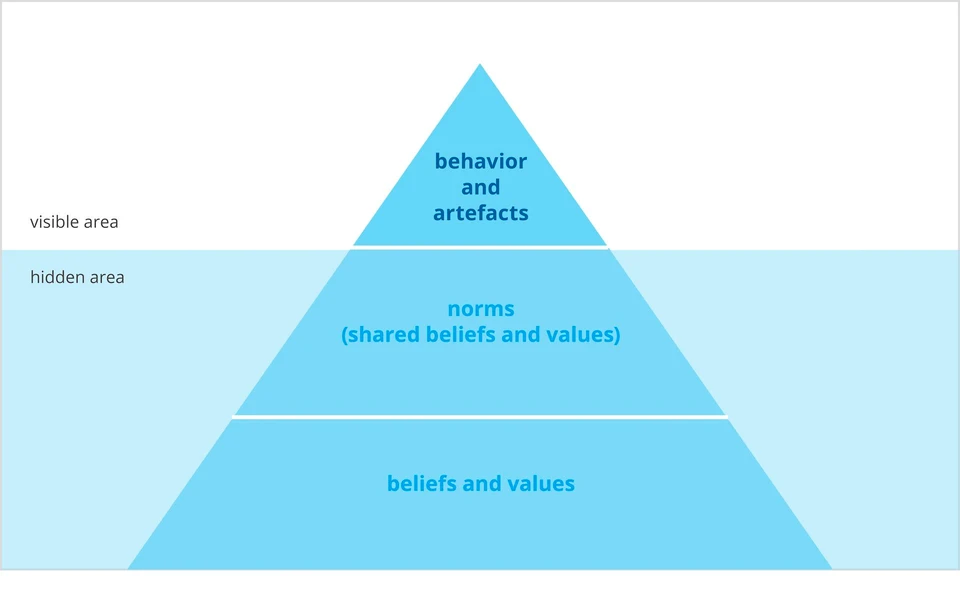
I have so often heard that collaborating with other professionals "takes a long time" and "is time-consuming." And unfortunately, that is true. But it is even more so if the only solution available to us is a fax. It will therefore be very difficult to change people's behaviour and their perception of interprofessional collaboration if their environment does not support it.
We are thus seeing a gap between the culture we want and the culture we experience in our network. Many changes are needed to support this transition, but I deeply believe that providing suitable communication channels that catalyze exchanges instead of inhibiting them is one possible solution.
Because yes, interprofessional collaboration takes time. But the consequences of not coordinating and not sharing enough information may take even more.